
Top Slot Machine Secrets
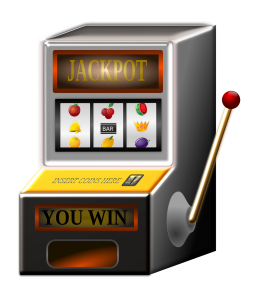
Hello comrade. Are you ready for some debriefing? In this article, I expose some of the slots’ best-kept secrets. By the time you’re done reading, you will understand the rationale behind the payout of slots and how you can make the best of it.
The Secret of the Bar Symbol
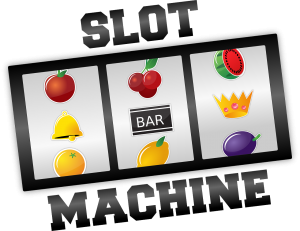
If you are familiar with several slot machines, you will notice that there is a BAR symbol on the reels. The BAR symbol looks like a rectangular bar that has the letters B-A-R written in it. As long as the slot has a Las Vegas or casino theme, you will most likely find a BAR symbol there. A lot of players like you have wondered what the BAR symbol represents and why it is present in many slot titles. Chances are you have also wondered why this symbol is common in slot games.
To fully understand the secret of this BAR symbol, we need to go back in time to know how it came about. This time frame I’m referring to is in the early 1900s when slot machines were banned in the United States of America. Local stores found a way around making profits from slot machines by making them pay out chewing gum packs instead of cash. Another thing you must have noticed when playing traditional slots are fruit symbols such as cherries and lemons. These fruit symbols are present because those were the most common chewing gum flavors of that time.
Out of all the proposed theories concerning the origins of the BAR symbol, two of these speculations are the most widely accepted. One theory says that the Bell-Fruit Gum Company owns the symbol due to the similarities between the company’s logo and the BAR symbol. The second theory suggests that it was Mills Novelty Company that brought about the BAR symbol after they created their mechanical slot machine.
BAR symbols have varying payout values according to different slot providers.
Slot Games Usually Have a 90% Average Return
Different slots across online casinos are designed to bring in profits to their operators. Knowing this, another popular secret of slots is that players usually have an average return of 90%. This stat usually comes with the rate of volatility or variance of the slot. With this information, you will know how often players can have wins.
For the RTP, it is guaranteed that all the slot players of that title are covered by that 90% return. Take it as a basket of insurance – some players will lose their money while others might double or even triple their bankroll. But what is important is that all the players share in the 90% RTP while the betting company gets 10% of all bets.
Artificial Intelligence Bots Keep Track of all Spins and Wagers
Online casinos have AI bots that track every action you take throughout your game and send feedback to the operators. Don’t be alarmed. This surveillance helps to protect the casino and players against bad actors. The AI of an online casino studies how thousands of players on the site use the platform with the help of advanced machine learning. The AI is used to find unusual behaviors on an account, such as unusual betting patterns and consistent wagering amounts.
If you want to know how an AI recognizes a cheater or hacker, let us first understand how the Random Number Generator (RNG) system of a slot works. The RNG determines the result of a game by using a seed to create results that are unpredictable. What hackers try to do is to target seeds that generate high payout results by spinning the reels at specific times. Once that seed is identified, the hacker will bet a large sum of money at a targeted period. When an AI notices behavior like this, it is an indicator that can attract flagging on an account.
AI bots also help to prevent problem gambling from the information obtained after tracking a player’s betting data. If the AI notices that a player spends an exorbitant amount of money on time on slots, that patron’s account gets flagged. Casino admins can send warning messages to flagged accounts or give them suspensions for a period depending on how severe the cases are.
Results are Generated Instantly
When you hit the spin button, you will see the reel that contains all the symbols spinning on the screen. This makes players think that slots use a virtual rotating wheel to determine what symbols will land on the reel.
But let me pull the curtains here… Immediately you push the spin button, the result is generated in less than a second with the help of a complex computer math equation behind the screen. What you see on the screen is a spinning reel that is just fancily emulating a mechanical slot. The truth is the slot handles that process in milliseconds.
Summary
I hope you have enjoyed this demystifying article about slots. In this article, you learned the following:
- The secret of the BAR symbol
- Slot games usually have a 90% average return
- AI bots keep track of all spins and wagers
- Results are generated instantly
Now that you know more secrets about the one-armed bandit let me know how you’ll use these secrets in the comments below.
 Nowadays, there are many posh gambling sites offering their services to Brits, with big, attractive bonuses for both new and loyal players. However, it is never good to judge a book by its covers, so it goes without saying that you shouldn’t do it when choosing where to play with real money either. So, you probably know that the biggest issue is safety when playing on the Internet and
  Sometimes you just don’t feel like being the cheerful, polite, and chatty person everyone expects you to be. Maybe you’d like to shut the world off and have a break from all the socialisation. Yet, you’d like to play a casino game. Well, you certainly don’t have to go to a casino and suffer the consequences of meeting people. You can just stay at home and play online.
  Getting ready to go out and play at a casino might cost you time and money. After all, who would want to look shabby at a lavish palace like that? But if you’re gaming online, you might just as well be a mess – nobody cares if you’re in your undies, a cheeseburger in one hand, a fag in the other. Fancy a quick game of blackjack at 4 am? No problem, online casinos have tables open around the clock.
  Yes, you heard right. Cheating at online casinos is fine. Whether you like to use a strategy chart or practise your card counting skills, there’re no bouncers to keep an eye on you and ask you to leave and never come back when they catch you paying a little too much attention to the cards. And we all know that card counting can really change people’s lives. As far as strategy charts go, they are the perfect tool for blackjack newbies.
 Hello and welcome to my blog! I don’t know who you are and you don’t know me either. Let’s keep it that way. Suffice to know that we share a common interest in online casino games and are brave enough to challenge the status quo and stare the iGaming industry in the eye, assess it as objectively as possible, call it out cold-bloodedly when it’s wrong… and still get out of it as much as we can.